


If you're moving from military service into technical work, the best artificial intelligence degree for veterans is the one that matches your coding experience, math preparation and intended job—not simply a degree with AI in its name. Start with computer science if you need technical foundations; consider a specialized AI master's if you already have them. This guide compares those routes with statistics and data science degrees for veterans, including what to check before using your GI Bill® benefits.
In this guide
- How we chose these five degree paths
- Bachelor's routes for technical foundations
- Graduate routes for building AI systems
- Data science for applied analysis
- How to choose and check your benefits
- FAQ
Key takeaways
- The best artificial intelligence degree for veterans depends on existing programming skills, mathematics preparation and career goals.
- Computer science is the default starting point when you need programming and software foundations.
- A specialized AI master's fits applicants who already meet its programming and mathematics prerequisites.
- VeteranDegrees provides free benefits guidance; schools determine admission, and VA determines benefit eligibility.
1. How we chose these five degree paths
These five paths address different starting points: learning to program, developing mathematical depth, specializing in AI, building software systems and analyzing data. This is not a ranking. The comparison evaluates degree types, not individual schools, and does not claim that one curriculum fits every veteran.
For your 2026 shortlist, compare required courses rather than program names. An AI title does not tell you whether a degree emphasizes mathematical theory, software development or business applications.
What makes an AI degree a good fit?
Use the same criteria for every program:
- Entry requirements: Your completed coursework and experience match the actual prerequisites.
- Programming depth: Required classes develop coding, debugging and software-building skills.
- Mathematical preparation: The curriculum addresses the mathematics its machine-learning courses require.
- Project evidence: Assignments let you demonstrate what you built and how you evaluated it.
- Delivery requirements: Attendance, examinations and project schedules fit your responsibilities.
- Benefit verification: The exact program, location and enrollment plan can be checked before you commit.
Degree paths at a glance
Computer science bachelor's
- Best fit: Building programming and software foundations
- Main limitation to investigate: AI specialization depends on required courses and electives
Statistics or mathematics bachelor's with computing
- Best fit: Developing quantitative depth
- Main limitation to investigate: Software development coverage needs separate review
Artificial intelligence master's
- Best fit: Specializing after relevant technical preparation
- Main limitation to investigate: Missing prerequisites can make the transition difficult
Computer science master's with an AI focus
- Best fit: Combining AI study with broader computing
- Main limitation to investigate: AI courses are not necessarily required
Data science master's
- Best fit: Working with data, models and analytical questions
- Main limitation to investigate: Deployment and systems coverage need careful review
Why this matters: You are choosing a sequence of skills, not collecting a label. A degree that starts beyond your preparation creates a different problem from one that repeats material you already know.
2. Bachelor's routes for technical foundations
1) Computer science bachelor's: for learning to build software
Best for: Veterans without a computing degree who want a foundation for technical AI work.
A computer science bachelor's is the starting point to examine if you need programming, algorithms, data structures and software development. Check the actual degree map: an introduction to AI is not the same as a sequence of machine-learning courses supported by mathematics and programming.
Pros: This route gives you a way to compare foundational computing requirements and keep your study broader than a single specialty. Cons: The degree title alone does not establish AI depth, and elective choices require planning.
What to look for:
- Required programming and data-structures courses before advanced AI electives.
- Mathematics requirements that support the machine-learning courses you intend to take.
- A substantial software project with clear individual responsibilities.
If your interest is administering technology rather than developing models or software, compare information technology degrees for veterans before choosing computer science. Those are different educational goals.
Verdict: Choose computer science when you need the computing foundation, not just exposure to AI tools.
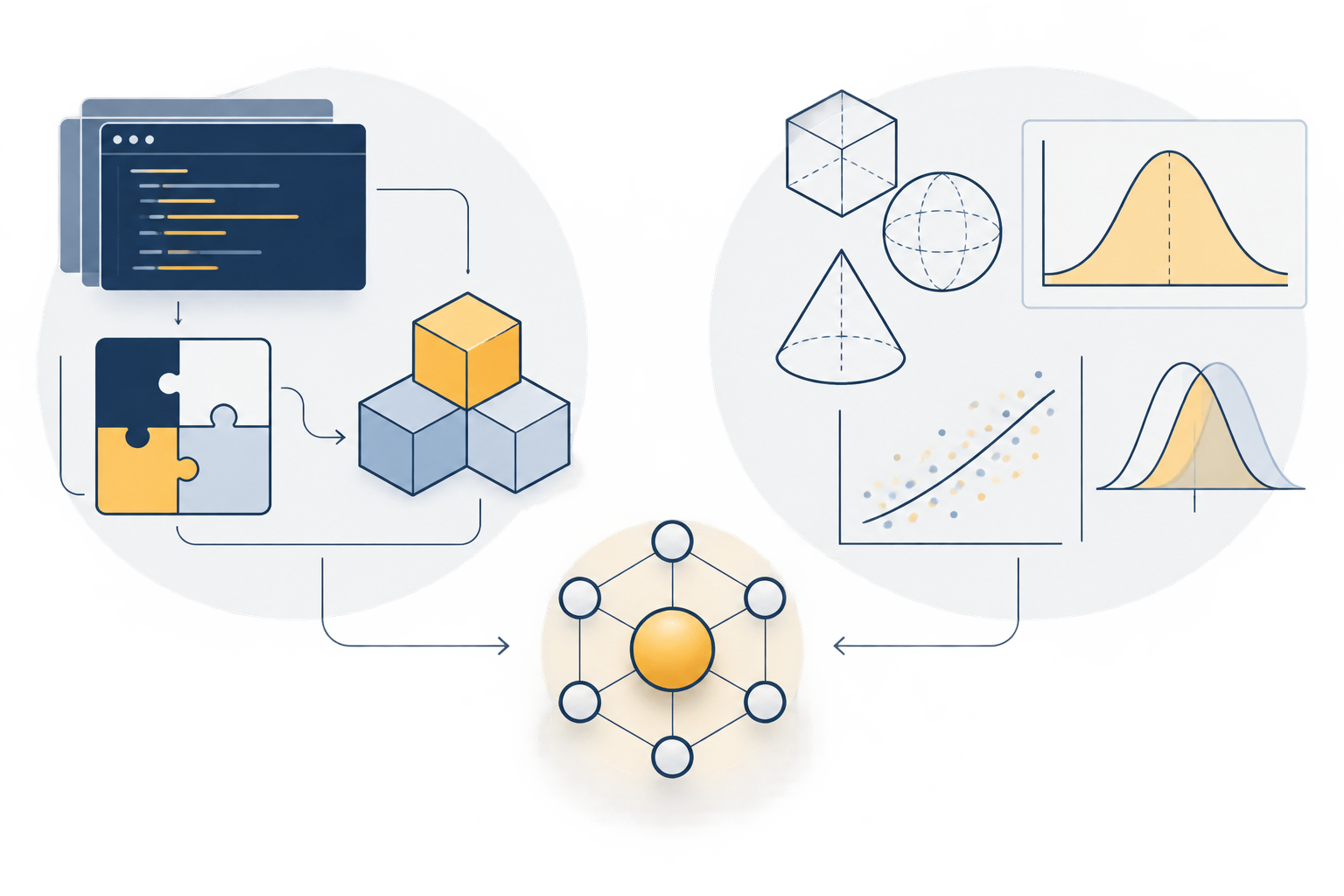
2) Statistics or mathematics bachelor's with computing: for quantitative depth
Best for: Veterans who want to understand probability, uncertainty and the mathematics behind models.
Examine statistics or mathematics programs when you want a quantitative route into AI-related study. Check computing requirements closely; mathematical preparation does not replace experience writing, testing and maintaining code.
Pros: This route puts mathematical reasoning at the center of your comparison. Cons: A program without substantial computing work requires a separate plan for programming and software projects.
What to look for:
- Probability, statistics and linear algebra in the required curriculum.
- Programming assignments that use real datasets rather than only written exercises.
- Access to computing electives and projects within your degree plan.
For your 2026 application, ask an academic adviser which computing courses count toward graduation. Do not assume that an interesting elective will fit your requirements or schedule.
Verdict: Choose the quantitative route when mathematics is your intended strength and computing is part of the plan.
3. Graduate routes for building AI systems
3) Artificial intelligence master's: for prepared technical applicants
Best for: Veterans who already meet a program's programming and mathematics prerequisites and want focused AI study.
A specialized AI master's deserves consideration when you can enter its technical coursework without skipping foundations. Request the prerequisite list and required course sequence before treating the degree as a career-change shortcut.
Pros: A focused curriculum lets you concentrate your comparison on AI subjects and projects. Cons: Specialization leaves less room to repair missing foundations, and similarly named degrees can have different technical expectations.
What to look for:
- Published prerequisites that match your completed coursework.
- Required machine-learning courses rather than a collection of optional topics.
- Projects that assess model quality, limitations and responsible use.
Ask what students must produce. A project that uses an existing model, an experiment that evaluates competing models and a project that implements a learning method demonstrate different skills.
Verdict: Choose an AI master's only after confirming that your preparation matches its entry point.
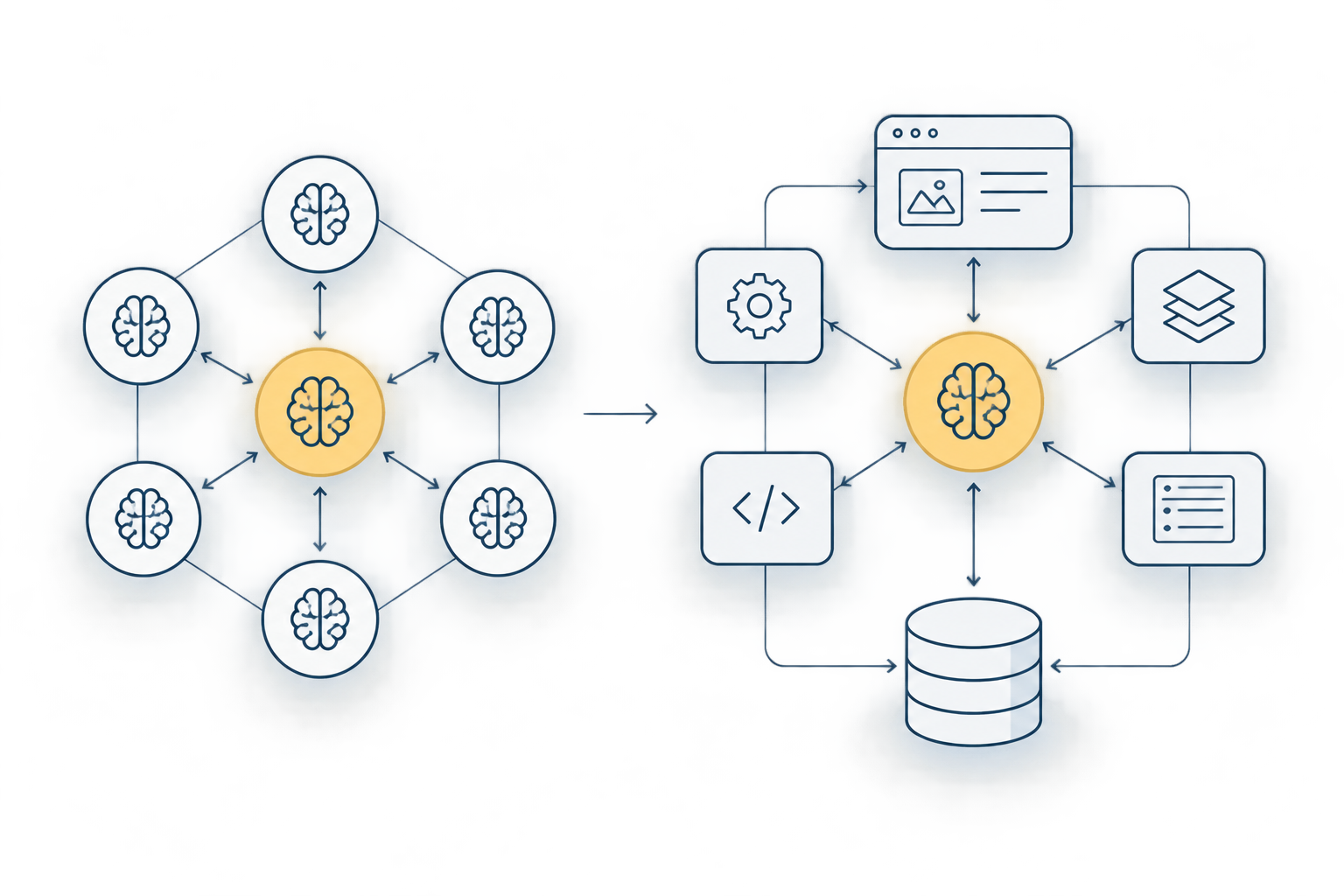
4) Computer science master's with an AI focus: for broader systems work
Best for: Technically prepared veterans who want AI coursework alongside broader computer science.
Compare a computer science master's when you want to study AI without making it your entire graduate curriculum. Inspect the required courses, available electives and capstone rules; an advertised AI focus does not establish what every student studies.
Pros: This route lets you assess AI alongside software, computing theory or systems coursework. Cons: Access to particular electives needs confirmation, and the program's general requirements can leave less space for specialization.
What to look for:
- A documented route through the AI electives you need.
- Systems or software courses relevant to your intended work.
- A thesis or capstone option with appropriate academic supervision.
For your 2026 shortlist, compare the attendance requirements separately from the curriculum. A hybrid degree program for veterans is useful only if the academic content and travel requirements fit your situation.
Verdict: Choose computer science with an AI focus when broader computing study supports your intended work.
4. Data science for applied analysis
5) Data science master's: for answering questions with data
Best for: Veterans whose intended work centers on preparing data, evaluating models and explaining findings.
A data science master's is worth comparing when your main interest is analytical work rather than building general-purpose software. Read the required curriculum to distinguish statistical analysis, machine learning, data engineering and business reporting.
Pros: This route gives you a framework for comparing data preparation, modeling and communication in one program. Cons: The title does not establish technical depth, and software deployment or infrastructure can fall outside the required coursework.
What to look for:
- Required work in data cleaning, statistics and model evaluation.
- Projects that explain assumptions, errors and limitations.
- Programming and database requirements that match your intended responsibilities.
Verdict: Choose data science when the analytical question—not the AI label—is the center of your career plan.
Who this does not fit
Do not choose a technical graduate degree solely because you have used conversational AI tools. Tool familiarity is not evidence that you meet programming or mathematics prerequisites.
Likewise, leadership experience does not establish technical preparation. Your military experience matters, but admissions requirements and course expectations still need a direct check.
Use a sample syllabus to test the fit. Identify the assignments you could begin now, the prerequisites you need and the academic support available before committing benefits.
5. How to choose and check your benefits
Start with the work you want to do
Write a plain-language target: build software, develop models, analyze data or lead technical projects. Then compare required courses and project work against that target.
Your 2026 decision should survive this question: Would you still choose this curriculum if the degree title did not contain AI? If not, revisit the course sequence before applying.
Request a written transfer-credit evaluation and an academic plan. Do not treat military training, prior study or professional experience as awarded credit until the school evaluates it.
Check coverage after checking academic fit
Review your Certificate of Eligibility, or COE, and your Post-9/11 GI Bill benefits. Ask the school's certifying official about the exact degree, campus and enrollment schedule you are considering.
VA's Post-9/11 GI Bill rate information for the academic year beginning August 1, 2026, lists a private-school tuition-and-fee cap of up to $30,908.34 per academic year and a books-and-supplies stipend of up to $1,000 per academic year, depending on eligibility. These are benefit limits, not a statement that a particular degree is fully covered.
The GI Bill housing payment is what many people call BAH; VA calls it the Monthly Housing Allowance, or MHA. VA's rates page, updated October 13, 2026, lists distance-only MHA of up to $1,198 per month, depending on eligibility and enrollment. VA pays no MHA while you are on active duty.
A hybrid program may qualify for resident-rate MHA when VA requirements are met, generally including enrollment more than half-time and an eligible in-person class that counts toward the degree. The school's certifying official and VA determine how the coursework is certified; the word hybrid is not a benefit determination.
Compare your remaining GI Bill months with the academic plan. If you use Veteran Readiness and Employment, or VR&E, your counselor approves the education plan and school.
Programs we work with
Westcliff University (VeteranDegrees partner) offers an MS Artificial Intelligence among the hybrid programs identified in the brand's program information. Confirm current prerequisites, required courses, attendance and program-specific benefit approval directly with the school before deciding.
This option belongs in a separate comparison, not above the degree paths. VeteranDegrees provides free educational guidance; it is not a school or the VA and does not determine admission or benefit eligibility.
6. FAQ
What's the best artificial intelligence degree for veterans without coding experience?
A computer science bachelor's is the starting point to examine if you need programming and software foundations. Check its required mathematics, programming sequence and access to AI coursework before choosing a school.
Is an artificial intelligence master's better than a computer science master's?
Neither is automatically better; choose according to your preparation and intended work. An AI master's fits focused specialization, while a computer science master's deserves comparison when you want broader computing coursework alongside AI.
Can I use the GI Bill for an artificial intelligence degree?
You may use GI Bill benefits for an approved program, depending on your eligibility. Confirm the exact degree, location and enrollment plan with the school's certifying official and VA rather than relying on the school's general participation.
Do I need a technical military job to study AI?
No specific military occupation establishes or replaces a college's admission requirements. Compare your transcripts and experience with the program's published prerequisites, then ask the school what preparation you still need.
Does a hybrid AI degree automatically qualify for resident-rate MHA?
No, a hybrid label does not establish resident-rate MHA eligibility. Your enrollment, eligible in-person coursework, benefit eligibility and current VA rules determine the result; the school's certifying official and VA decide how the coursework is certified.
Can VeteranDegrees help me compare AI programs?
VeteranDegrees offers free educational Benefits Navigator phone consultations to help you understand how benefits apply while comparing degree options. The service does not grant degrees, make admission decisions or determine VA eligibility, and you submit your own applications.
Want to talk it through? Book a free VeteranDegrees Benefits Navigator call to discuss your career goal, current preparation and benefits questions. You can also check any school in VA's GI Bill Comparison Tool and the Web Enabled Approval Management System, or WEAMS; confirm the exact program before applying.