


You can use FAFSA and GI Bill® benefits together: FAFSA is the application for federal student aid, while VA handles your education benefits separately. Instead of trying to reconcile two systems after classes begin, complete both processes and ask your school's financial aid office and school certifying official to explain how the awards fit together. This guide helps you decide what to submit, what to report and which questions to ask before accepting loans.
In this guide
- Before you start: understand the two processes
- Complete your FAFSA
- Request your GI Bill certification
- Compare your awards before accepting loans
- Resolve problems and repeat the workflow
- FAQ
Key takeaways
- You can use FAFSA and GI Bill benefits together; completing FAFSA does not use your GI Bill entitlement.
- Federal Student Aid excludes GI Bill education benefits from income reported on FAFSA.
- Compare grants, school charges and VA coverage before accepting federal student loans.
- VeteranDegrees provides educational guidance; your school and VA determine awards and benefit payments.
1. Before you start: understand the two processes
FAFSA does not replace a VA education-benefits application, and a VA application does not replace FAFSA. The Free Application for Federal Student Aid helps schools determine eligibility for federal grants, work-study and loans. Your GI Bill eligibility follows VA rules.
This matters because an apparent funding gap can reflect unfinished paperwork rather than a final bill. You need both offices working from the same school, program and enrollment information.
What to have ready
- For FAFSA: your own Federal Student Aid account, the financial information the application requests and the schools you want to receive your information. Any required contributor uses a separate account.
- For VA certification: your Certificate of Eligibility, or COE, if issued; your intended degree; and your course schedule. Start with the Post-9/11 GI Bill eligibility guide if you have not established which benefit applies.
- The gotcha: the financial aid office and school certifying official perform different jobs. Sending a COE to admissions does not establish that either office has everything it needs.
Which funding source does what?
Federal Pell Grant
- Useful when: You meet federal eligibility rules and need grant assistance
- Main limitation: Submitting FAFSA does not establish eligibility or an award
Federal Direct Loan
- Useful when: You have an uncovered education expense and understand repayment
- Main limitation: Borrowing creates a repayment obligation
GI Bill benefits
- Useful when: You have VA eligibility and an approved education plan
- Main limitation: Coverage depends on your benefit chapter, eligibility and enrollment
This is a comparison of funding functions, not a ranking. VeteranDegrees provides education-benefits guidance for veterans who want help organizing these questions; it does not award aid or decide VA eligibility.
2. Complete your FAFSA
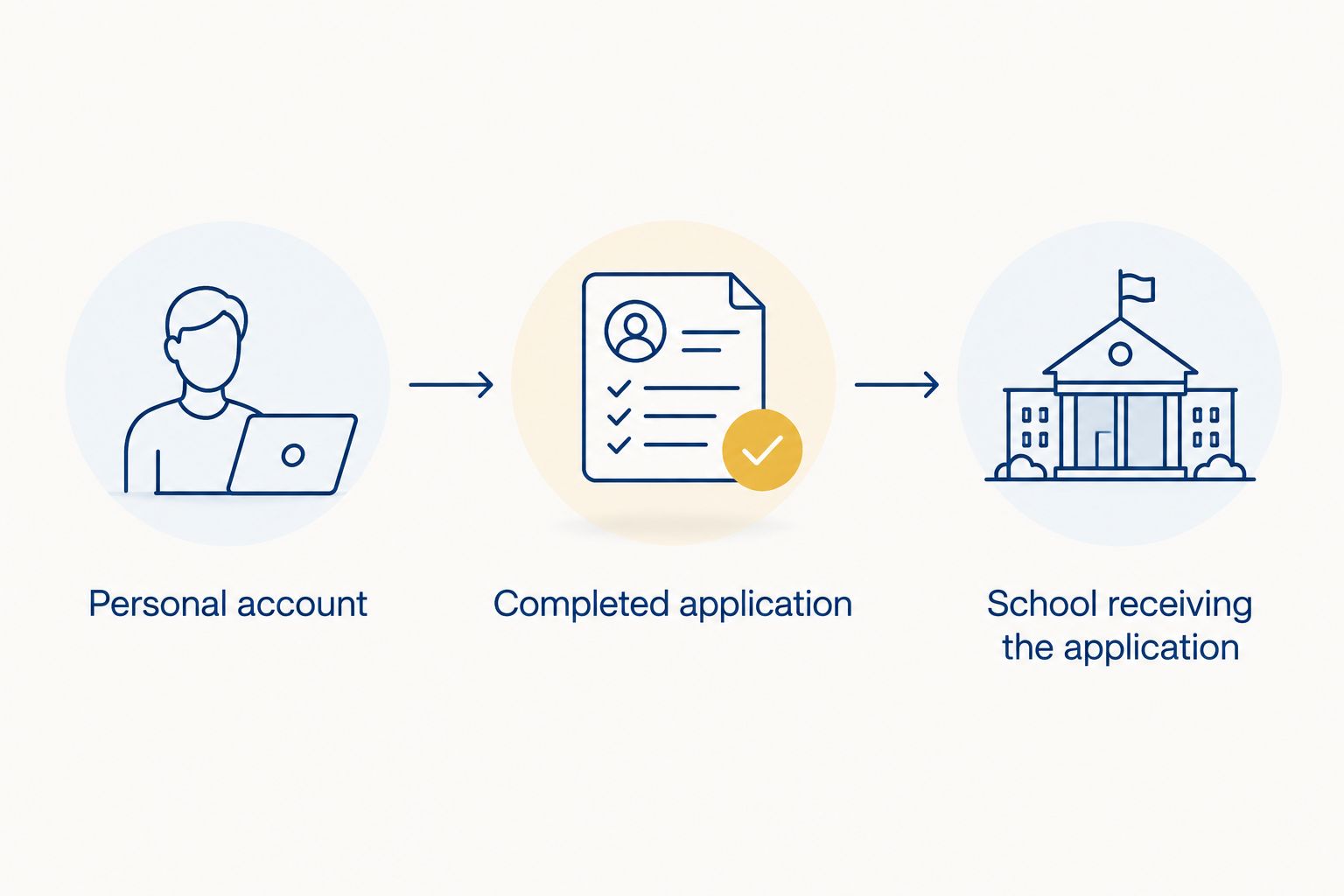
FAFSA account and application
- Sign in through Federal Student Aid using your own account. Do not share your password with a school representative or guidance service.
- Select the FAFSA Form for the award year covering your attendance. For classes crossing an award-year boundary in 2026, ask the financial aid office which application it needs.
- Answer the personal-circumstances questions accurately. Veteran status can establish independent-student status, but you must meet FAFSA's definition of a veteran; military family membership alone does not establish independence.
- Provide the financial information and any contributor information the form requests. Do not substitute your current income for the requested tax information.
- Add the schools you are considering. Federal Student Aid's 2026–27 FAFSA instructions allow up to 20 schools on the online application; a Federal School Code contains 6 characters.
- Sign and submit the application. Then review your FAFSA Submission Summary for errors and required actions.
Expected result: your FAFSA is submitted, your intended schools are listed and you know whether any follow-up remains. A submitted application is not the same as a completed financial aid file at the school.
Report education benefits correctly
Federal Student Aid's guidance for veterans excludes GI Bill education benefits from income reported on FAFSA. Do not add those payments to wages simply because you received them during the tax period.
That exclusion is not permission to omit unrelated income or ignore asset questions. Follow each question's instructions, and ask the financial aid office when a payment's classification is unclear. Keep a copy of the explanation with your 2026 aid records.
3. Request your GI Bill certification
VA eligibility and school records
- Identify your benefit chapter. Post-9/11 GI Bill and Montgomery GI Bill payment structures differ, so do not apply one chapter's billing assumptions to another.
- If you are applying for VA education benefits for the first time, review VA's application instructions. VA Form 22-1990 is the application for education benefits for eligible veterans and service members; other circumstances can require a different form.
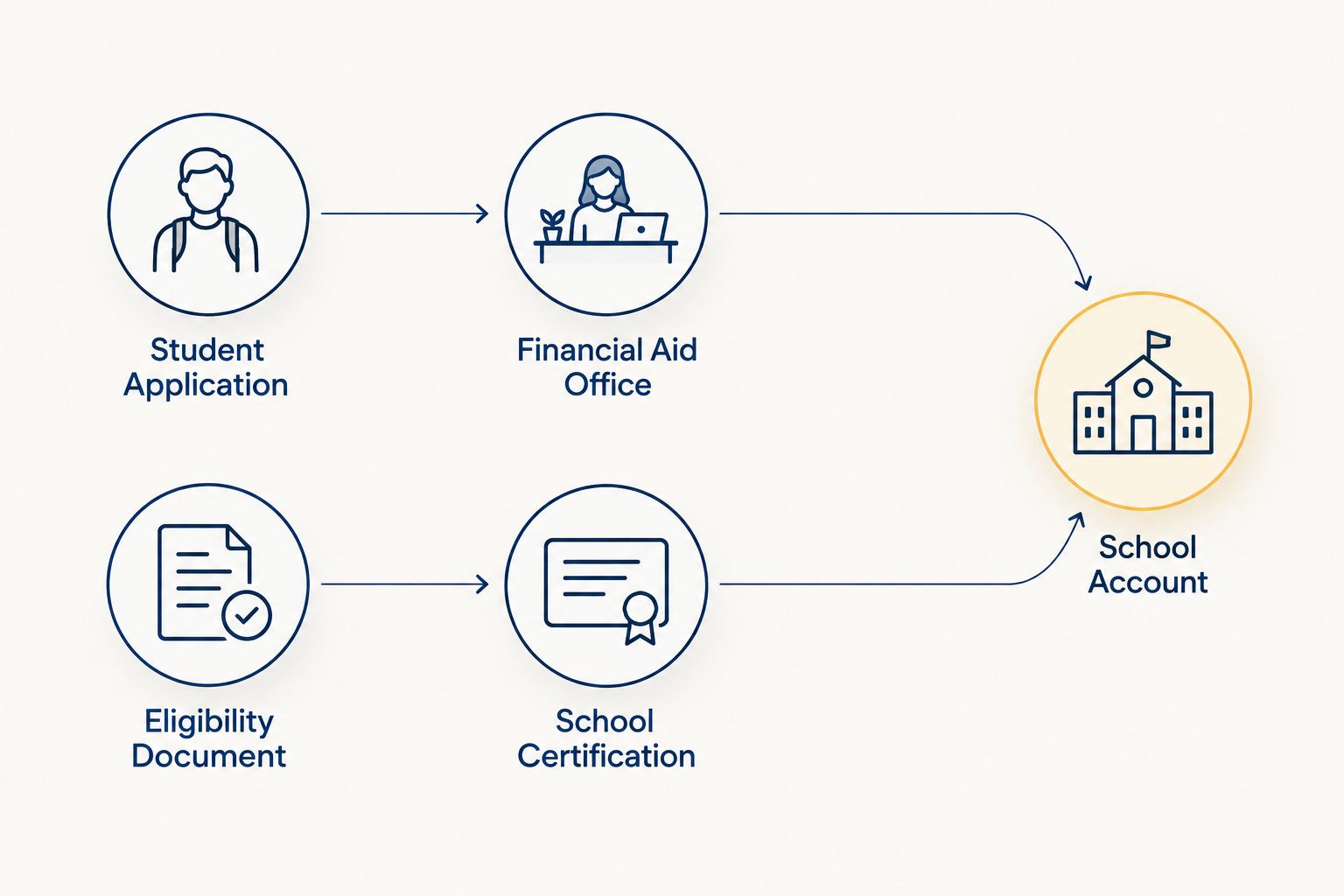
- Give the school certifying official the documents the school requires. Ask how you request certification for your particular term rather than assuming admission starts the process.
- Confirm that your courses count toward your approved program. Discuss electives, repeated courses and schedule changes before relying on benefit coverage.
- Ask when the school expects to certify enrollment and how it handles charges while VA payment is pending. Get the school's answer in writing.
Expected result: you know who handles certification, which documents remain outstanding and how the school will treat your account while payments are processed.
Match your benefit percentage to your plan
For Post-9/11 users, a COE helps identify the eligibility percentage that applies. The Post-9/11 GI Bill percentage guide explains why having eligibility does not automatically mean every education expense is covered.
Keep housing support separate from tuition in your worksheet. Most people call the GI Bill housing payment BAH; VA calls it the Monthly Housing Allowance, or MHA. Eligibility and payment depend on your circumstances and enrollment, and VA pays no MHA while you are on active duty.
Do not treat a housing estimate as a credit already posted to your tuition account. Ask which payments go to you and which go to the school.
4. Compare your awards before accepting loans
Financial aid offer and student account
- Obtain the school's financial aid offer and an itemized student account. Separate grants, scholarships, work-study and loans rather than treating the total offer as money you can spend.
- Ask the financial aid office which awards require acceptance or additional documents. Work-study requires eligible employment; it is not an automatic payment against your bill.
- Ask the certifying official how tuition-restricted scholarships or other tuition-specific assistance affect the net charges reported to VA. Federal Pell Grants are treated differently from aid restricted solely to tuition and fees.
- Compare confirmed funding with tuition, required fees, books and realistic living expenses. Keep estimated or pending payments visibly separate from confirmed credits.
- Decide whether to accept, reduce or decline offered loans. Ask the school to explain any loan terms you do not understand before accepting.
Expected result: you have a written explanation of the remaining gap and know whether borrowing addresses an actual expense.
If grants and confirmed GI Bill coverage meet your needs, declining unnecessary loans avoids taking on that debt. If a gap remains, compare repayment obligations with the expense the loan would cover. Do not assume an aid offer's loan amount is a recommendation to borrow it all.
Use the scholarships guide for veterans and military families to broaden your search. Report outside awards as your school requires so the financial aid office can review their effect on your package.
VeteranDegrees can help you prepare questions about education benefits, but only your school can explain its final aid offer and account adjustments.
5. Resolve problems and repeat the workflow
When your circumstances change
Repeat the comparison whenever your school, course load or aid package changes. A plan built around one schedule does not automatically apply after you drop a class or switch programs.
For your next award year, submit the appropriate FAFSA and complete the school's renewal requirements. Separately, follow the school's process for requesting VA certification each term. If entitlement is running low, review how to check your GI Bill months left before committing to a longer degree plan.
Specific problems and fixes
- Your school cannot find your FAFSA: confirm the correct award year and school listing, then check whether the application processed successfully. Ask whether your name or other identifying information needs correction.
- Your FAFSA does not reflect a major income loss: contact the financial aid office about a special-circumstances review. Do not rewrite requested tax information to force a different result.
- Your aid offer includes loans you do not want: follow the school's instructions to reduce or decline them. If funds have already been disbursed, ask about the applicable cancellation or return process.
- Your account still shows a balance while VA payment is pending: ask the certifying official about certification status and student accounts about the charge. A pending VA payment and an uncovered charge require different action.
- Your aid package changes after certification: request an updated explanation from both offices. Do not assume the change means you did something wrong or that an earlier refund remains yours to spend.
Customize your records
Keep a single folder for your 2026 FAFSA confirmation, financial aid offer, COE, certification requests and account statements. Record the office responsible for each unresolved question.
Ask for the reason behind a refund before spending it. A credit balance can include borrowed funds or payments subject to later adjustment. VeteranDegrees offers educational guidance, not a determination that a refund is final or that you owe nothing.
6. FAQ
Can I use FAFSA and GI Bill benefits at the same time?
Yes. FAFSA is an application for federal student aid, and GI Bill benefits follow a separate VA process. You may qualify for both, depending on federal aid rules, VA eligibility and your school's review.
Do I report GI Bill benefits as income on FAFSA?
Federal Student Aid excludes GI Bill education benefits from income reported on FAFSA. Follow the application instructions for other income and assets, and ask your financial aid office if you are unsure how to classify a payment.
Can a veteran receive a Pell Grant while using the GI Bill?
Yes, an eligible veteran can receive a Federal Pell Grant while using GI Bill benefits. Pell eligibility depends on federal rules and the school's determination; having GI Bill eligibility does not establish Pell eligibility.
Does submitting FAFSA use any of my GI Bill months?
No. Submitting FAFSA does not use GI Bill entitlement. VA entitlement use relates to your education-benefits enrollment, not the act of applying for federal student aid.
Do veterans need their parents' information on FAFSA?
Veterans who meet FAFSA's definition of a veteran are independent students and generally do not need parental information. Do not assume that every type of military service meets that definition; follow the form's instructions for your circumstances.
Should I accept student loans if I have GI Bill benefits?
Accept loans only after comparing confirmed benefits and grants with your actual education expenses. You can decline or reduce an offered loan, and your financial aid office can explain repayment terms and the school's acceptance process.
Want to talk it through? Request a free Benefits Navigator call to organize your school shortlist and questions about how your benefits apply. You can also check any school using VA's GI Bill Comparison Tool and Web Enabled Approval Management System, known as WEAMS; VeteranDegrees is not a school or the VA.

When is the GI Bill® housing allowance paid? Monthly dates and your first payment

Using the GI Bill® for an MBA: A Veteran's Guide